


4
Starting seeds indoors is one of the best ways to get a head start on your garden. Many vegetables need extra time to grow before they can be safely planted outside, especially in regions like Missouri where spring temperatures can still be unpredictable.
By starting seeds indoors, gardeners can grow stronger plants, extend their growing season, and often enjoy larger harvests.
If you’re new to gardening, this guide will show you when to start seeds indoors and which plants benefit the most from indoor starting.
Why Start Seeds Indoors?
Starting seeds indoors offers several advantages:
🌱 Earlier harvests
Plants get a head start before outdoor planting season begins.
🌱 Stronger seedlings
You can control lighting, temperature, and watering.
🌱 More plant variety
Seed catalogs offer many more varieties than garden centers.
🌱 Cost savings
Seeds are much cheaper than buying established plants.
When to Start Seeds Indoors
Most seeds should be started 6–8 weeks before your area’s last frost date.
In much of Missouri, the average last frost date is mid-April to early May, depending on your exact location.
A simple rule:
Start seeds indoors between early March and mid-April.
However, different vegetables require different timelines.
Vegetables That Should Be Started Indoors
These vegetables benefit most from indoor starting:
Tomatoes
Start seeds 6–8 weeks before last frost.
Tomatoes need a long growing season and grow best when transplanted as young plants.
Peppers
Start peppers 8–10 weeks before last frost.
Pepper seeds germinate slowly and benefit from the extra indoor time.
Broccoli
Start broccoli 6 weeks before last frost.
Transplant outdoors in early spring for best results.
Cabbage
Start cabbage 6–8 weeks before last frost.
Cool temperatures help cabbage develop properly.
Eggplant
Start eggplant 8–10 weeks before last frost.
Eggplants need warm temperatures and benefit greatly from indoor starting.
Seeds That Usually Do NOT Need Indoor Starting
Some vegetables grow better when planted directly in the garden.
Examples include:
- Carrots
- Radishes
- Beans
- Peas
- Corn
- Cucumbers
- Squash
These plants grow quickly and often don’t transplant well.
Basic Supplies for Starting Seeds
You don’t need expensive equipment to start seeds successfully.
Most beginner gardeners start with:
🌱 Seed trays or small containers
🌱 Seed starting mix
🌱 Seeds
🌱 Grow lights or a sunny window
🌱 Spray bottle or watering can
Many gardeners reuse yogurt cups or small containers with drainage holes.
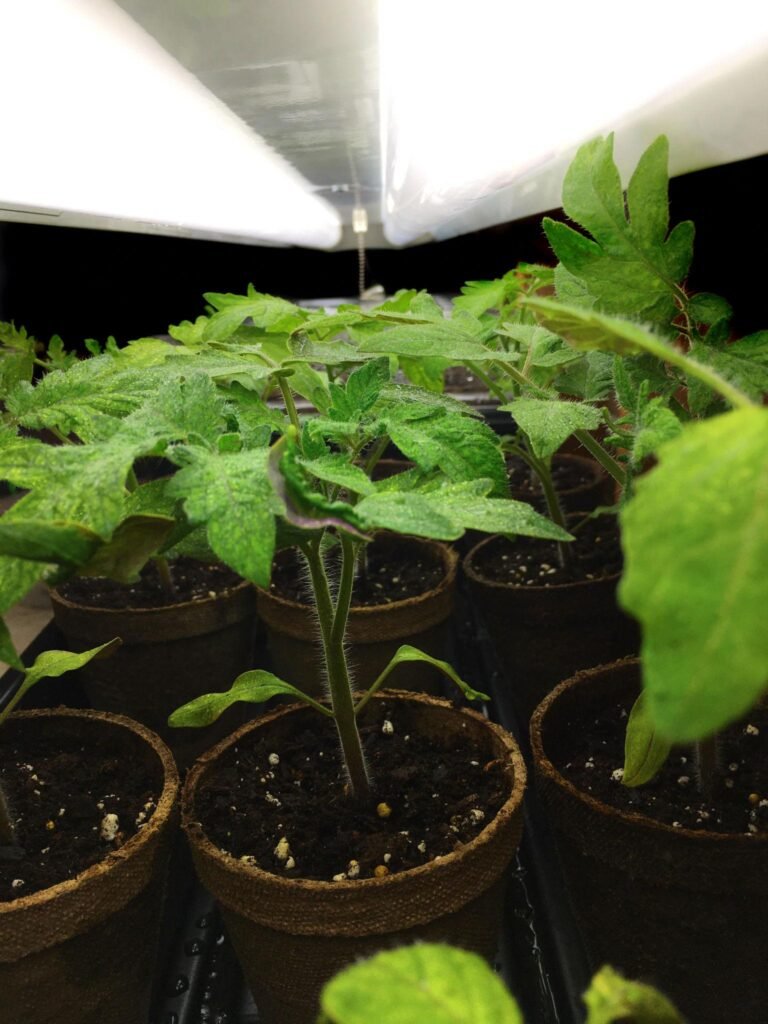
Lighting Tips for Strong Seedlings
Light is one of the most important factors for healthy seedlings.
Without enough light, plants become tall and weak.
For best results:
- Place seedlings in a south-facing window
- Use LED grow lights if possible
- Keep lights about 2–3 inches above seedlings
Seedlings usually need 12–16 hours of light per day.
Hardening Off Seedlings
Before moving plants outside permanently, they must adjust to outdoor conditions.
This process is called hardening off.
For about one week:
- Place seedlings outdoors for a few hours each day
- Gradually increase sunlight exposure
- Bring them indoors at night if temperatures drop
After about a week, plants will be ready for the garden.
Final Thoughts
Starting seeds indoors is one of the most rewarding parts of gardening. Watching tiny seeds grow into strong plants can make the gardening season feel even more exciting.
With a little preparation and the right timing, beginner gardeners can successfully grow healthy seedlings ready for planting outdoors.
Before long, those tiny seedlings will become a productive backyard garden.