
Turn a small indoor space into a productive garden.
Grow herbs, leafy greens, seedlings and compact vegetables with containers, shelves, reliable light and a simple care routine.
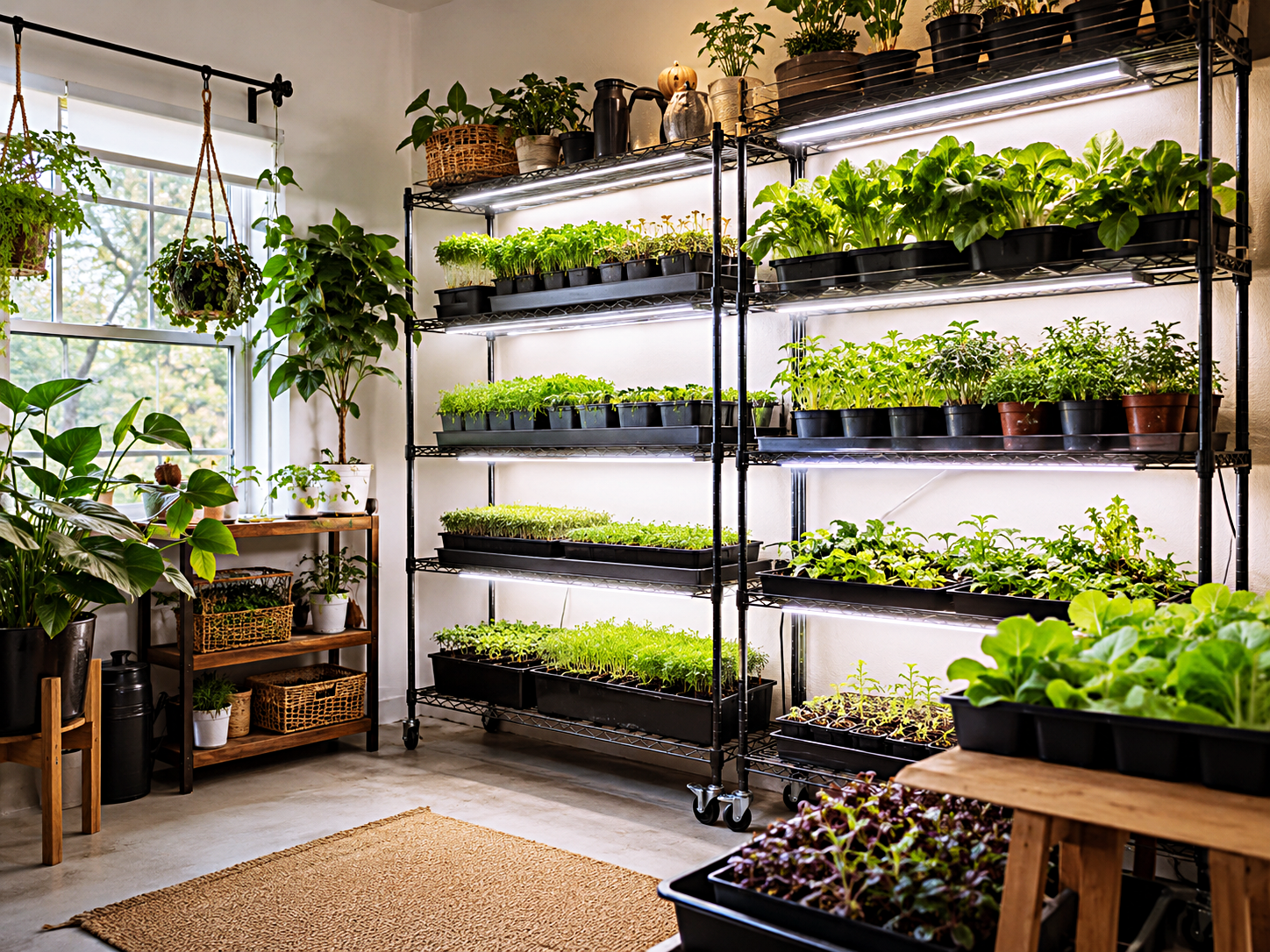
Three practical ways to grow indoors.
Pick the option that best matches your space, budget and comfort level.
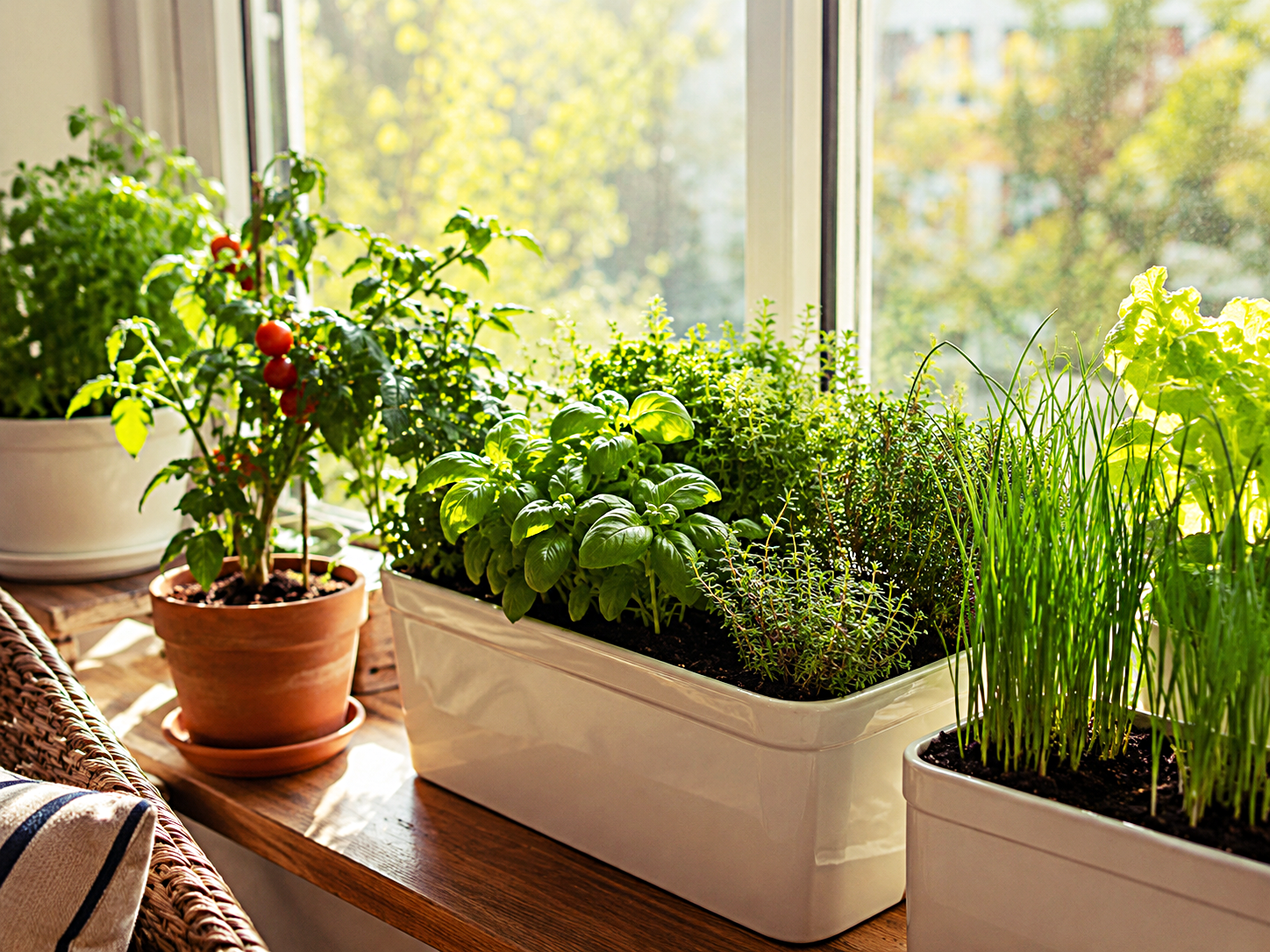
Windowsill Garden
A simple setup for herbs and small greens near a bright window.
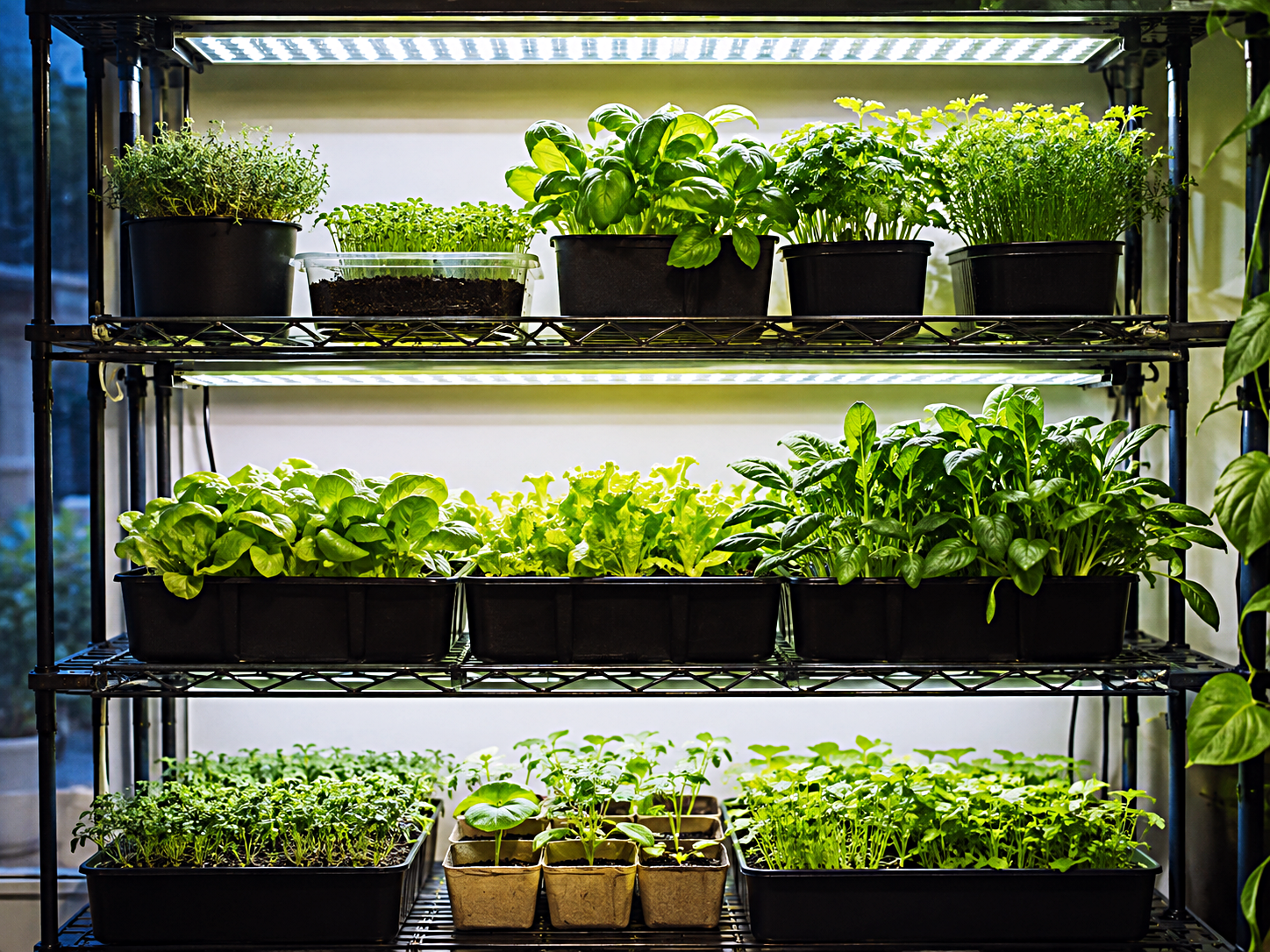
Grow-Light Shelf
A flexible setup for herbs, greens, seedlings and year-round growing.
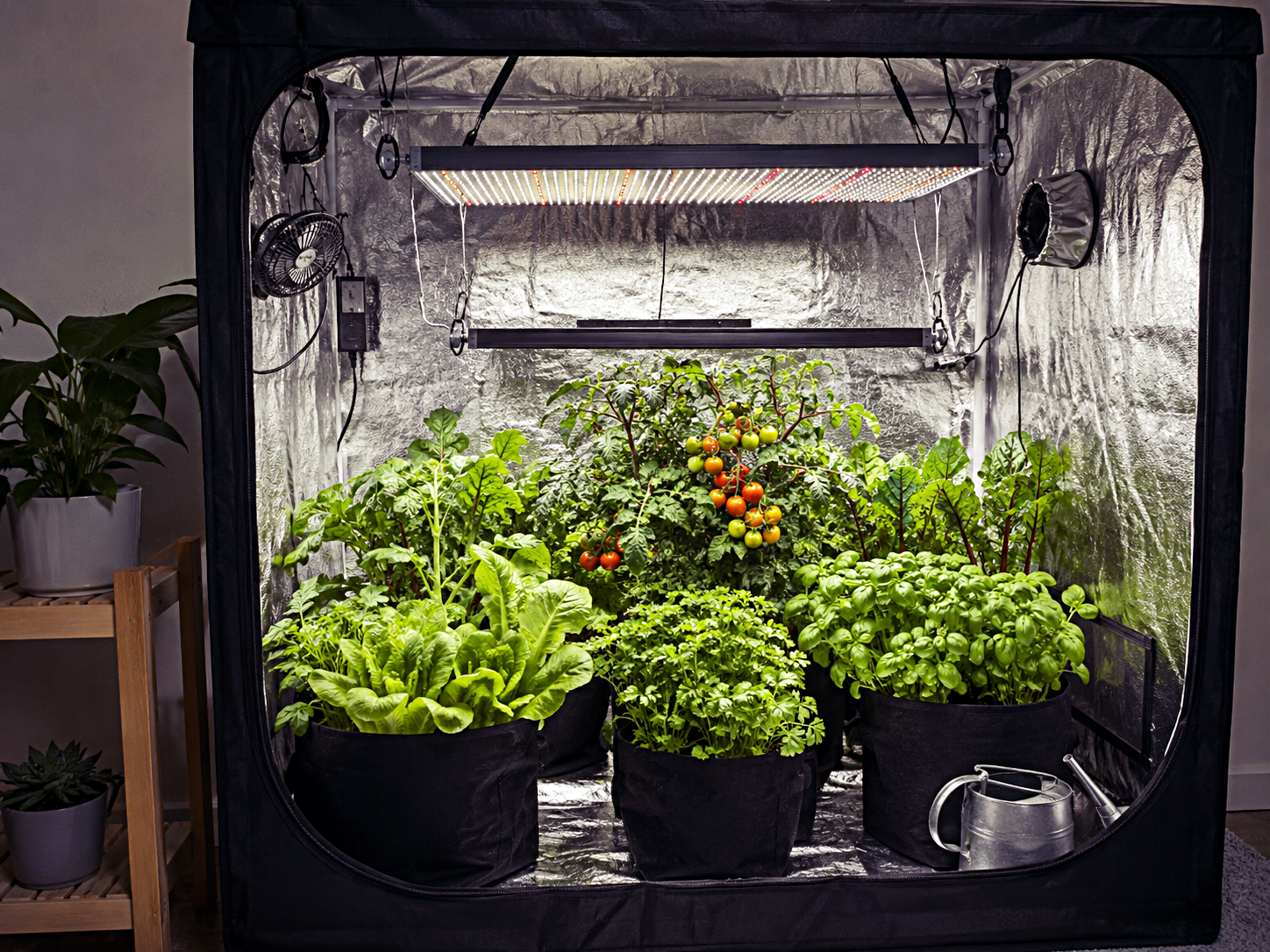
Small Grow Tent
A more controlled space for people who want stronger lighting and privacy.
Indoor gardens depend on dependable light.
Natural light
Bright windows can support herbs and some greens, but light changes by season, window direction and nearby shade.
Watch how the plants respond instead of assuming a window is bright enough.
Grow lights
Grow lights make indoor growing more predictable and help prevent stretched, weak plants.
Start with plants that fit small spaces.
Herbs
Basil, parsley, cilantro, chives and mint are useful and compact.
Leafy Greens
Lettuce, spinach, kale and arugula fit trays and shallow containers.
Seedlings
Start vegetables indoors before moving them outside.
Compact Vegetables
Dwarf tomatoes and small peppers work with stronger light and larger pots.
Build a routine around four basics.
Water
Check the growing medium before watering instead of watering automatically.
Airflow
Use gentle air movement to reduce stagnant conditions and strengthen plants.
Temperature
Keep plants away from extreme drafts, heaters and sudden temperature changes.
Cleanliness
Remove dead leaves, wipe spills and keep trays and tools clean.
Notice the signs early.
Plants are tall and weak
The light may be too weak, too far away or not running long enough.
Leaves are yellowing
Check watering habits, drainage, nutrition and light before changing everything at once.
Soil stays wet too long
Improve drainage, reduce watering frequency and increase gentle airflow.
Small insects appear
Inspect nearby plants, remove damaged material and clean the growing area promptly.
Build one reliable growing station.
Start small and improve the setup after you learn what your plants need.
Core equipment
Helpful extras
Choose your next step.
A small indoor garden can still produce something useful.
Start with a few healthy plants, steady light and a routine you can maintain.