
Build a clean, controlled garden with hydroponics.
Hydroponic systems grow plants using water, nutrients, light and oxygen. Start with a simple setup, learn the routine and expand only when you are ready.
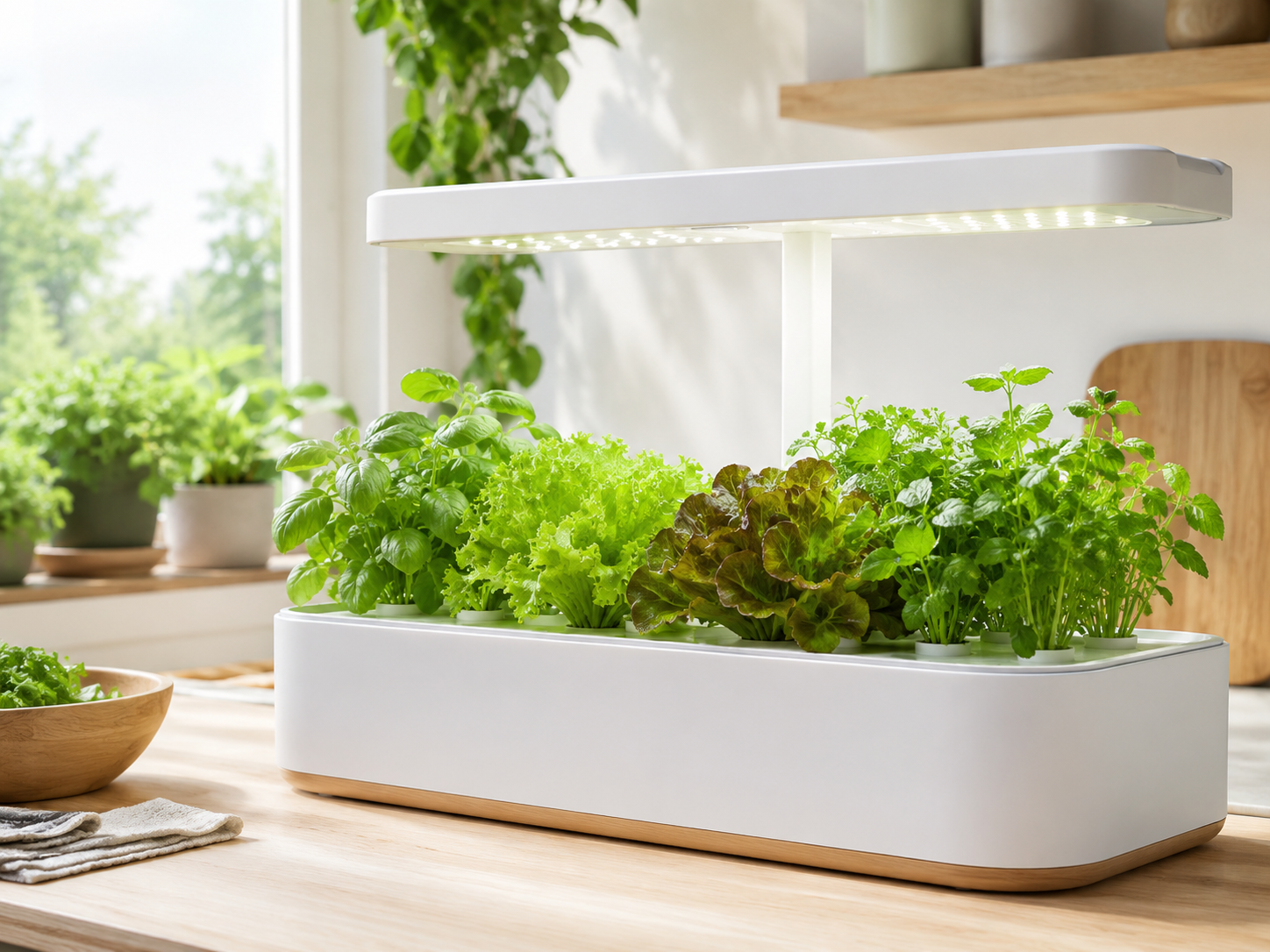
Plants still need the same basics.
Hydroponics changes how roots receive water and nutrients, but plants still rely on light, oxygen and steady care.
Water
Roots receive moisture directly through the system.
Nutrients
Plant food is measured and mixed into the water.
Light
Plants need reliable natural light or an appropriate grow light.
Oxygen
Healthy roots need access to oxygen as well as water.
Four common ways to start.
The best system is the one you understand, can maintain and can afford to troubleshoot.
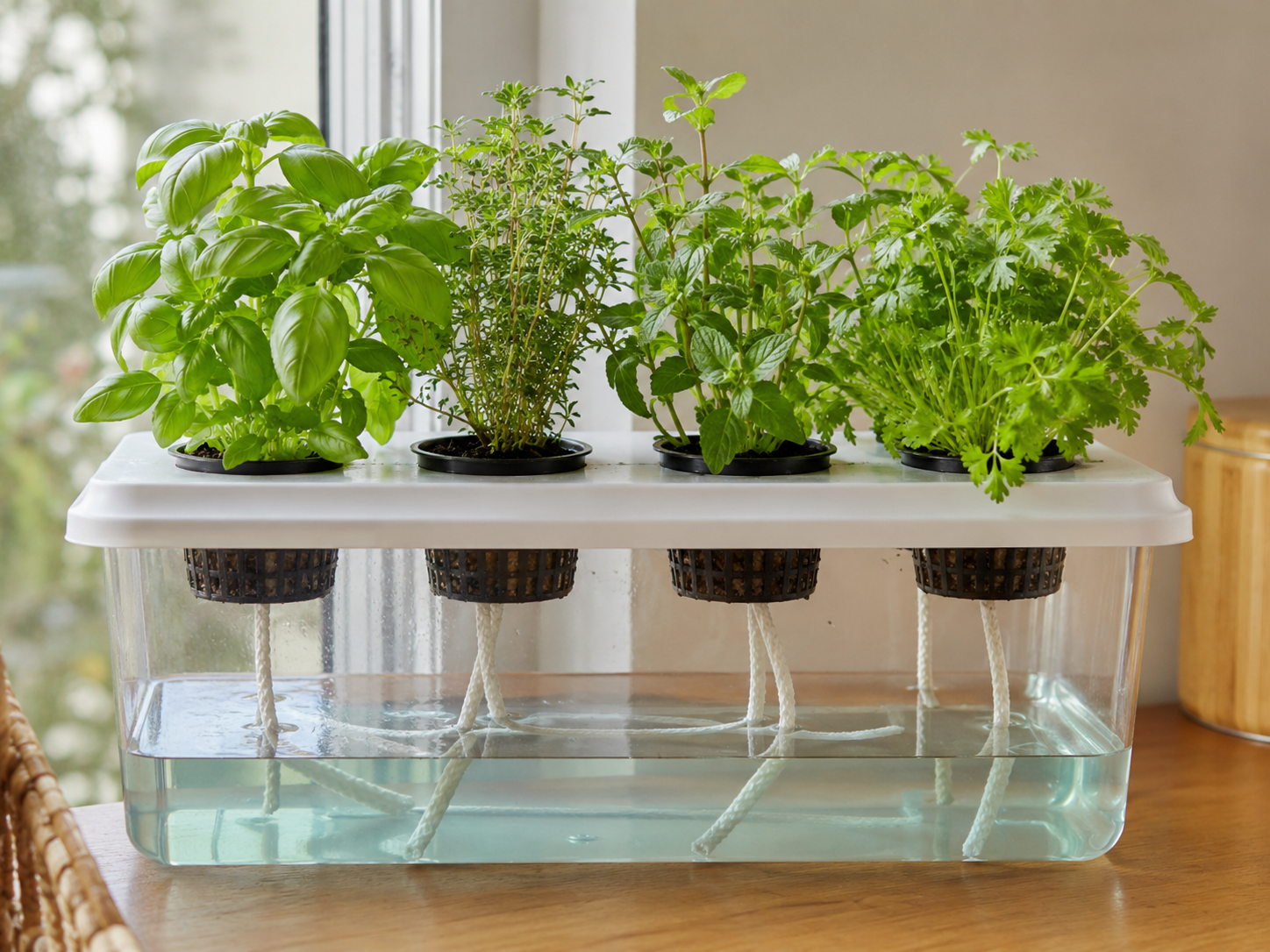
Wick System
A passive setup that moves nutrient solution toward the roots using an absorbent wick.
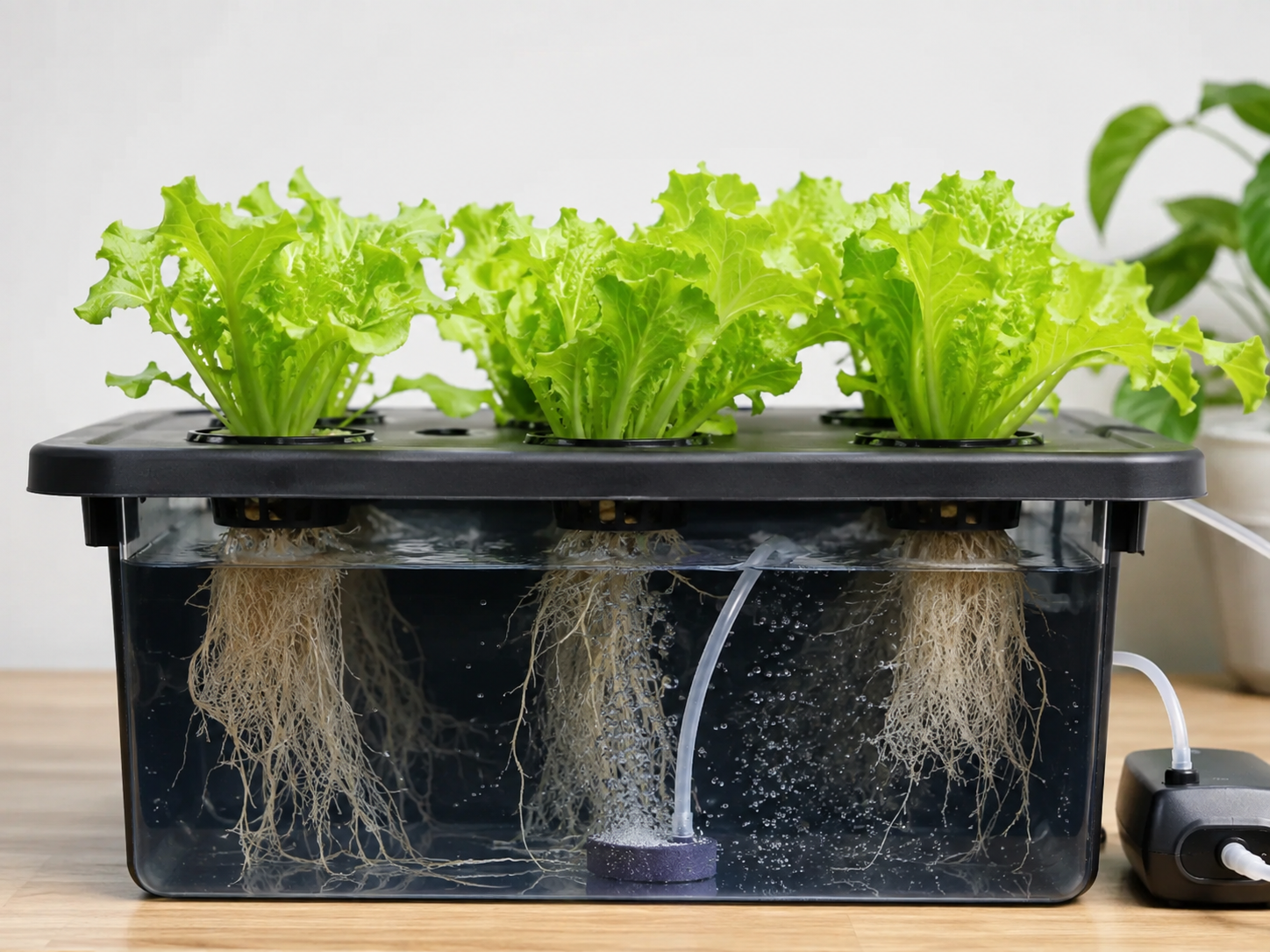
Deep-Water Culture
Plant roots sit in nutrient-rich water while an air pump helps keep the root zone oxygenated.
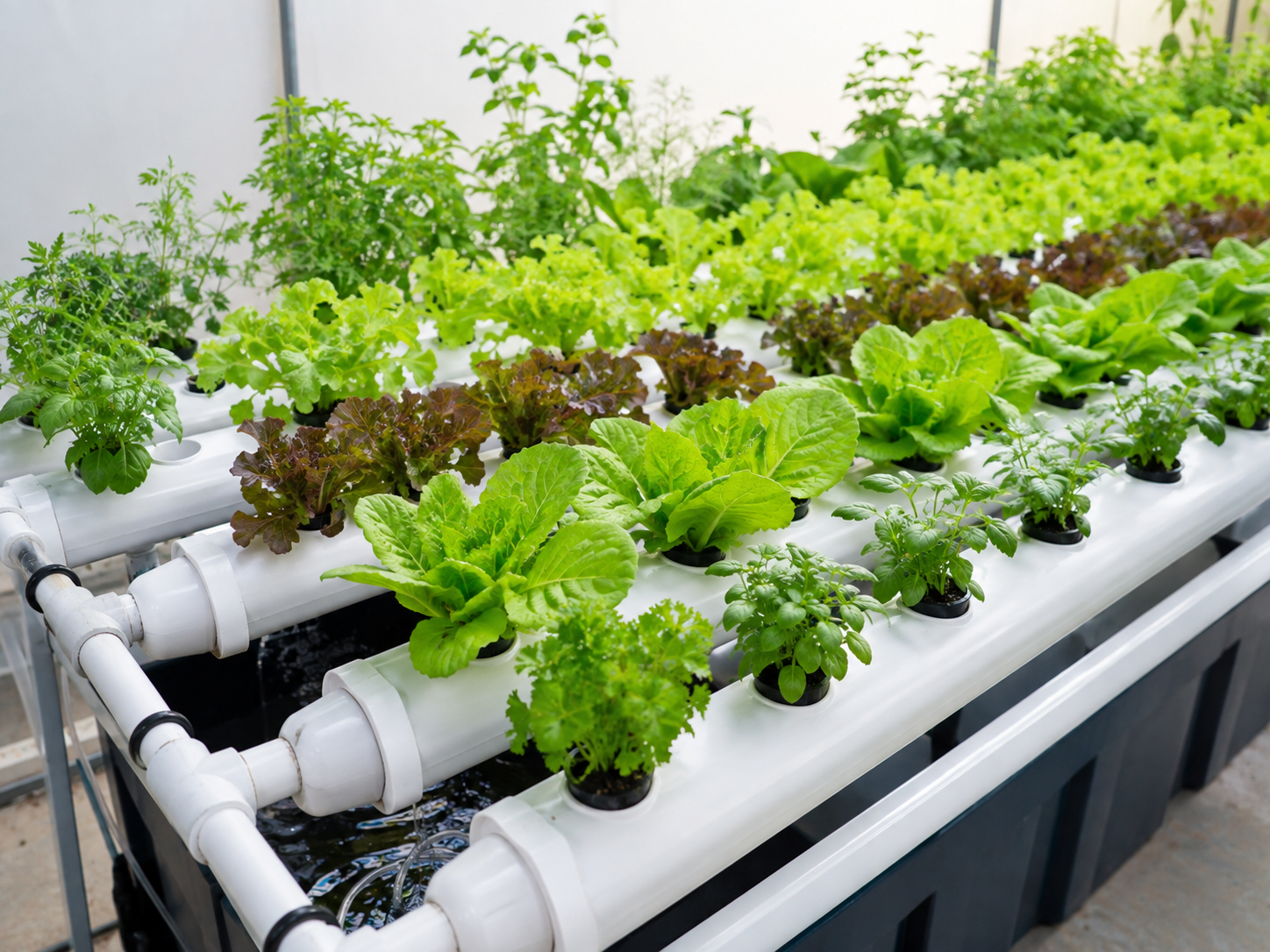
Nutrient Film Technique
A thin stream of nutrient solution flows continuously past roots inside channels.
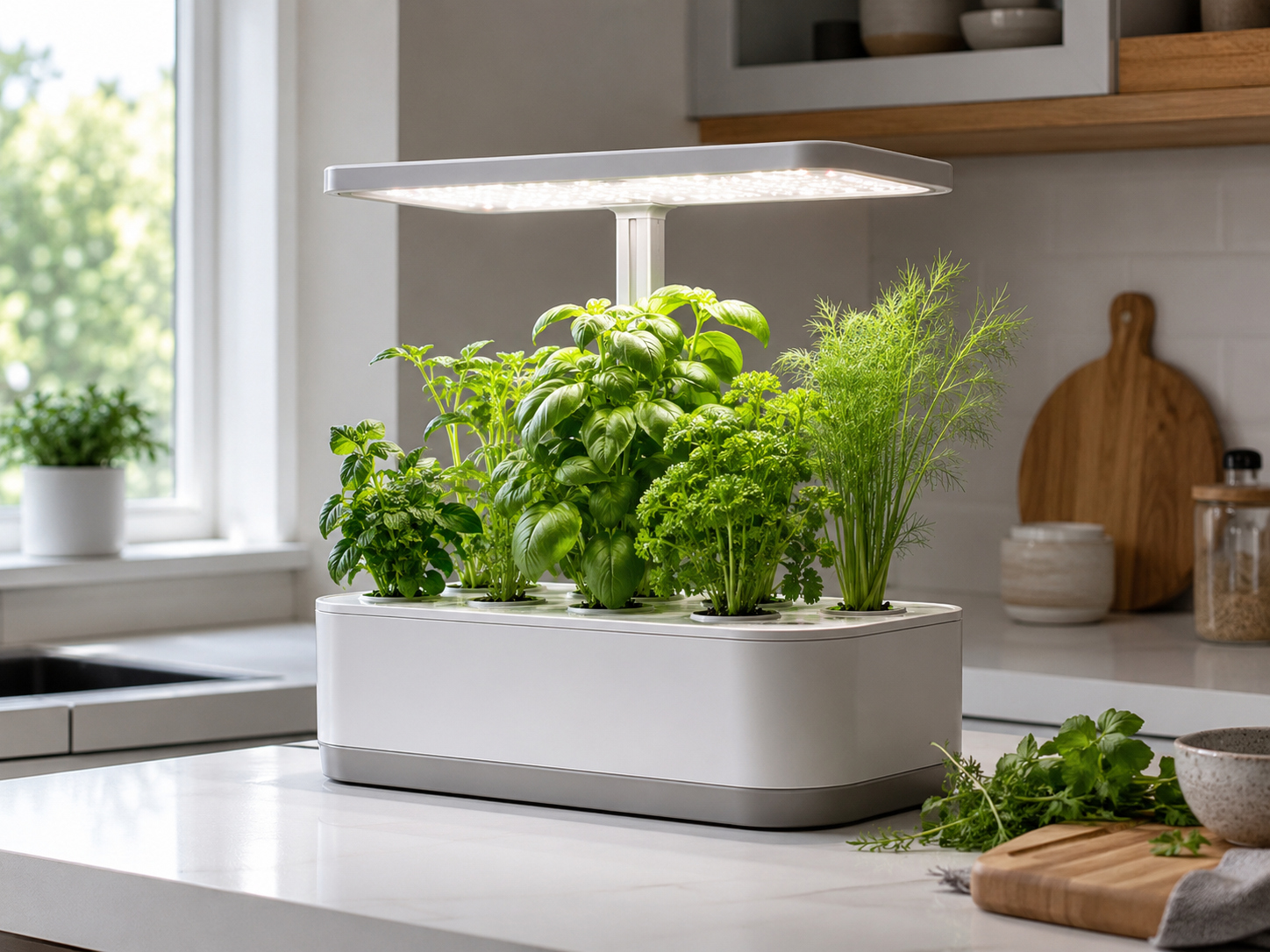
Countertop System
A compact all-in-one unit with built-in lighting, water circulation and growing pods.
Consistency matters more than constant adjustment.
Learn your system, make one change at a time and keep simple notes.
pH
Check whether the water is in the useful range for nutrient uptake.
Nutrient strength
Mix according to the product directions and crop stage.
Water temperature
Avoid water that becomes excessively warm or cold.
Oxygenation
Keep pumps, air stones and moving water working as designed.
Choose fast, compact plants first.
Lettuce
Fast-growing and well suited to many beginner systems.
Herbs
Basil, parsley, cilantro and mint fit compact home systems.
Asian Greens
Bok choy and similar greens can grow quickly with steady care.
Microgreens
A short-cycle crop for trays and small controlled spaces.
Check the system before problems grow.
Look at the plants
Notice leaf color, growth, wilting and root condition.
Check the water
Confirm the level, temperature and general cleanliness.
Confirm equipment
Make sure pumps, lights, timers and air stones are working.
Record changes
Write down adjustments so you know what helped or hurt.
Diagnose slowly and change one thing at a time.
Leaves are pale or yellow
Check nutrient strength, pH, lighting and root health before adding more fertilizer.
Roots look brown or smell unpleasant
Inspect water temperature, oxygenation, cleanliness and damaged plant material.
Plants are stretching
The light may be too weak, too far away or running for too little time.
Growth suddenly slows
Check pumps, water flow, pH, nutrient levels and recent environmental changes.
Gather the essentials before planting.
Core system supplies
Monitoring and care
Choose your next step.
A good hydroponic system should feel understandable, not mysterious.
Start small, learn the routine and build confidence before adding more plants or equipment.