
Start with what you have and grow from there.
You do not need perfect soil, acres of land or expensive equipment. A successful garden begins with one realistic plan and a simple routine.
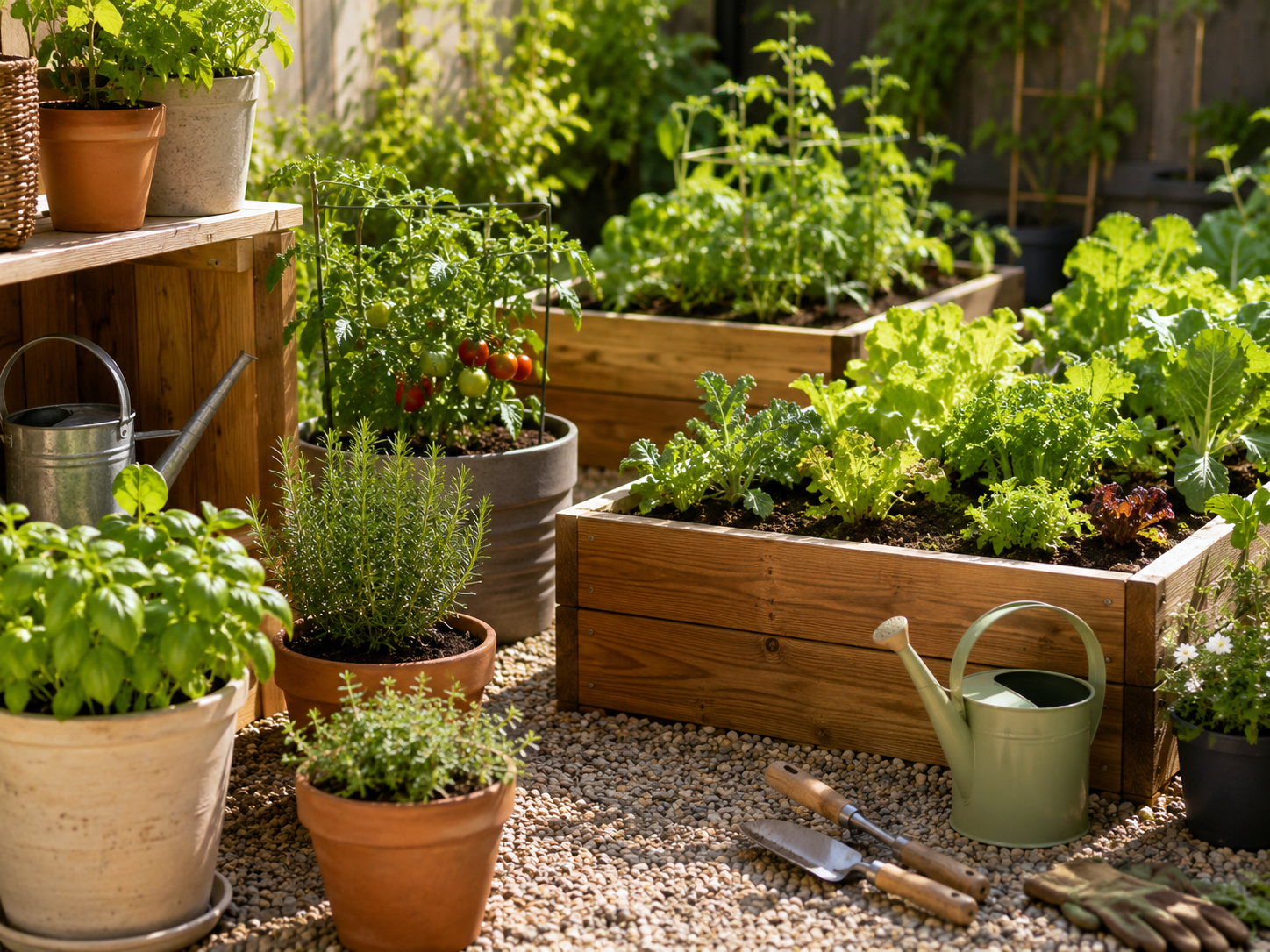
Check five things first.
These five decisions will help you avoid wasted money, weak plants and an overwhelming setup.
Space
Measure the area you can actually use, indoors or outdoors.
Light
Notice how many hours of direct or bright light the space receives.
Water
Choose a setup that is easy to water consistently.
Budget
Set a limit before buying containers, soil, lights or systems.
Time
Plan around the attention you can realistically give each week.
Begin with one manageable growing space.
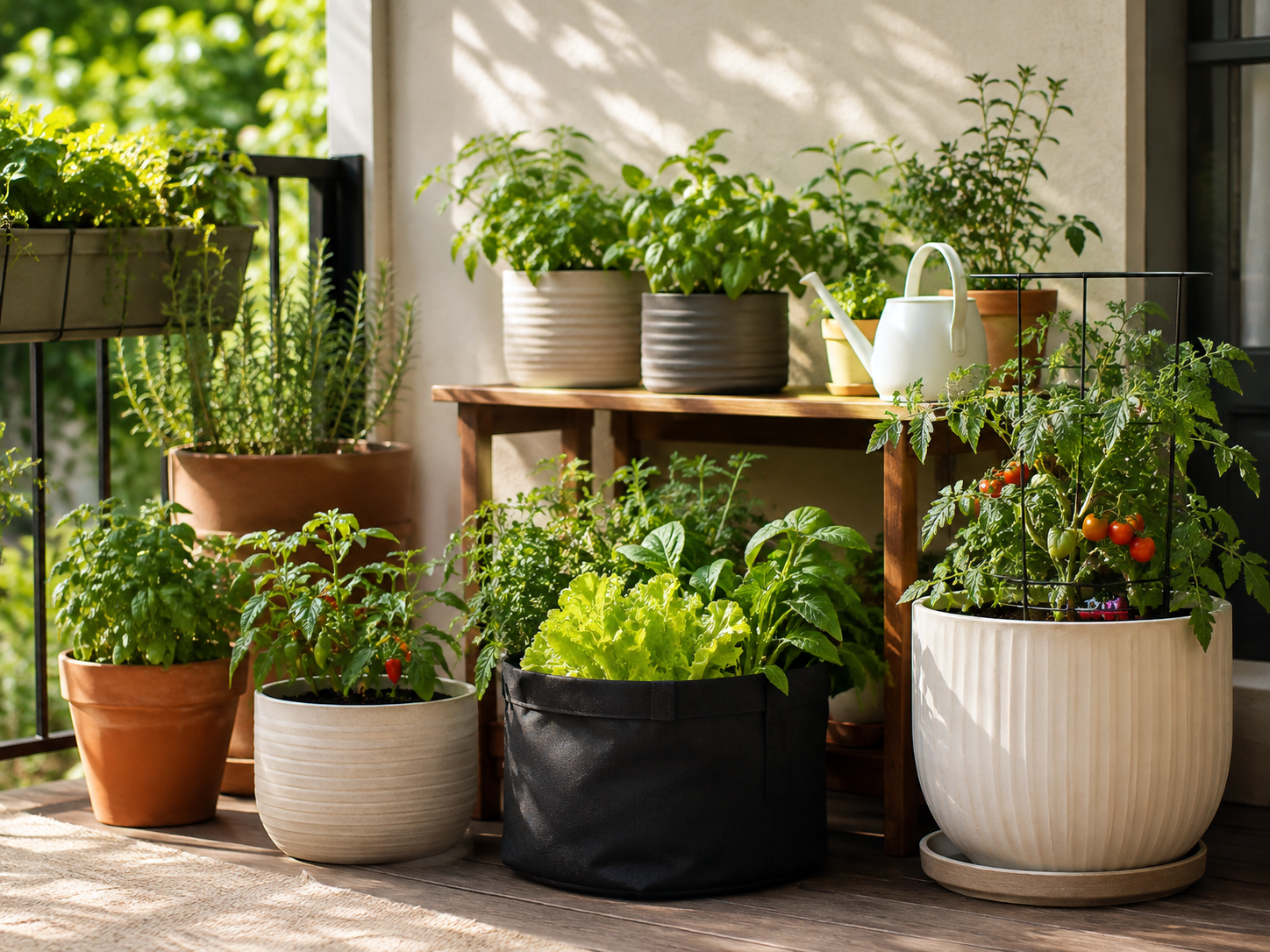
Container Garden
Ideal for patios, porches, balconies and sunny doorways.
Small Raised Bed
A practical starting point for people with a sunny yard.
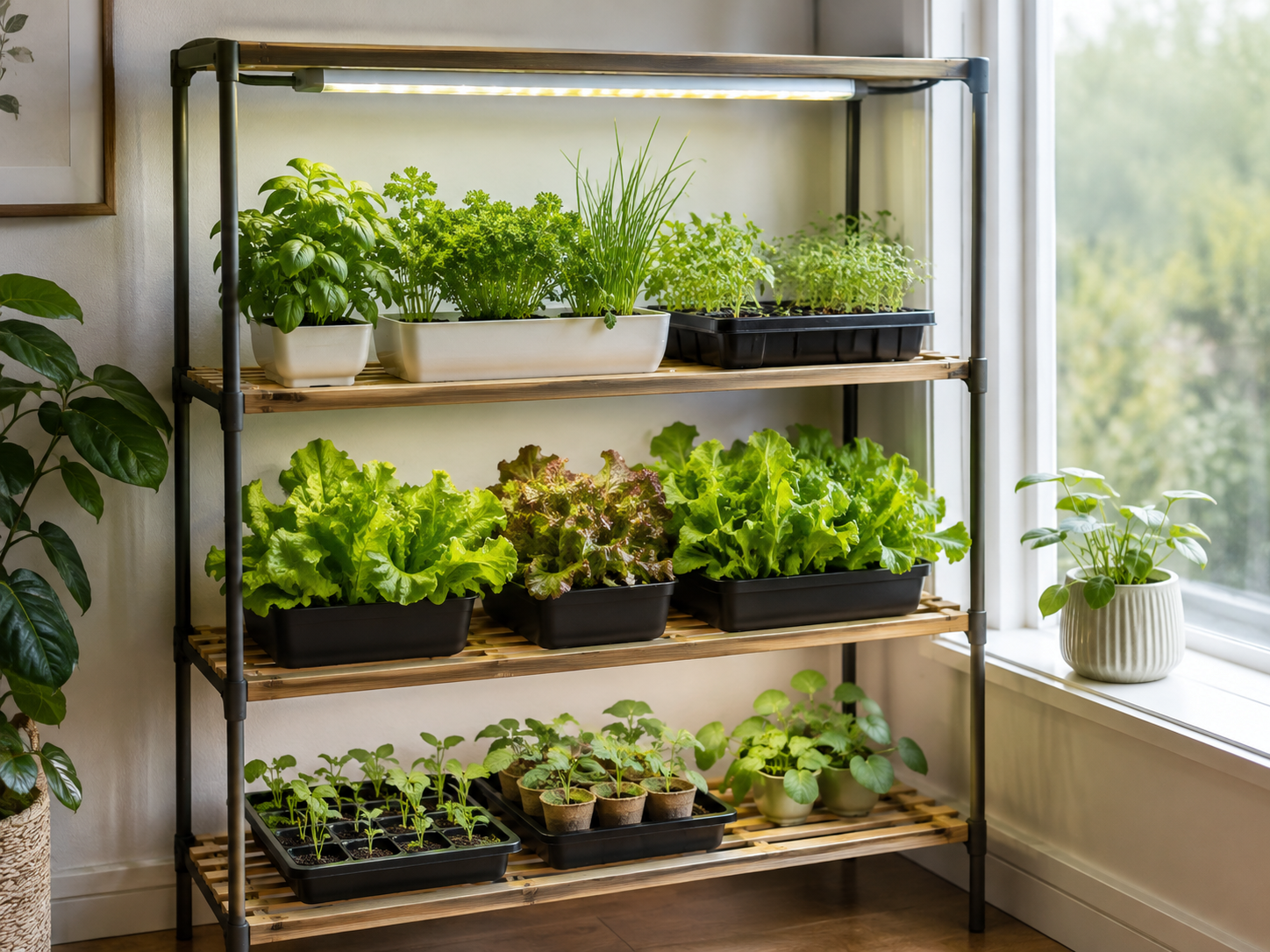
Indoor Shelf Garden
A year-round option for homes with limited outdoor space.
Choose plants that reward steady care.
Start with a few crops that match your light, space and season rather than planting everything at once.
Herbs
Basil, parsley, chives and mint are useful and compact.
Leafy Greens
Lettuce, spinach and kale can grow quickly in small spaces.
Radishes
Fast-growing roots that help beginners learn timing and spacing.
Cherry Tomatoes
A productive choice for sunny containers, beds and greenhouses.
Buy what supports your first setup.
You can add specialized supplies later. Begin with the essentials.
For soil-based growing
For indoor growing
Keep your first garden simple.
Buying too much too soon
Choose one setup before purchasing tools for several different systems.
Watering without checking
Learn how the soil or system feels before adding more water automatically.
Ignoring light requirements
Match crops to the light you truly have rather than the light you hope you have.
Planting too many varieties
A few reliable crops are easier to observe and manage than a crowded first garden.
Skipping a routine
Set simple days for watering, checking pests, harvesting and cleaning.
Waiting too long to notice problems
Look at your plants often so you can respond while issues are still small.
Where would you like to grow?
Your first garden only needs to teach you what to do next.
Begin with one realistic setup, pay attention to what happens and build from what you learn.