
Before Bringing Hens Home: What to Plan Before You Buy Your First Chickens
A little planning before the flock arrives can make chicken keeping safer, easier, and much more enjoyable for both you and your hens.
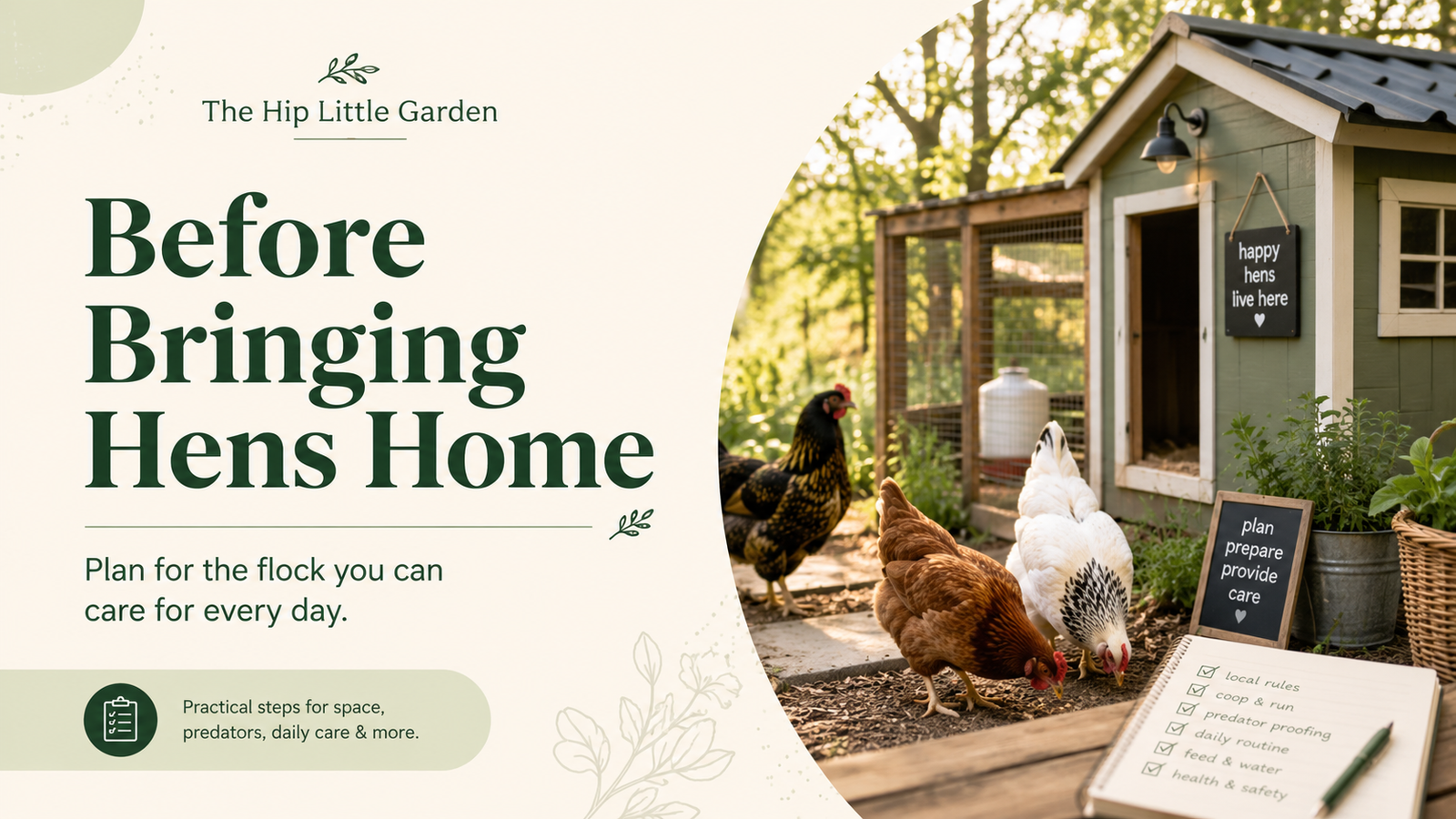
Bringing home your first hens is exciting. It is also one of those projects where the fun part — picking breeds, naming chickens, imagining fresh eggs — can easily happen before the practical part.
Before the birds arrive, it helps to think through the space, local rules, predators, daily care, feed storage, water, and what your household can realistically maintain every single day.
1. Check Your Local Rules First 🌿
Before buying hens, check the rules where you live. Depending on your location, there may be restrictions involving flock size, roosters, property setbacks, coop placement, permits, or nuisance ordinances.
- Check city, county, HOA, or subdivision rules that apply to your property.
- Confirm whether roosters are allowed.
- Look for setback requirements for coops or runs.
- Find out whether there are limits on the number of birds.
Do this before buying birds
It is much easier to adjust your chicken plan before hens are living in your backyard than to discover afterward that your setup does not meet local requirements.
2. Plan the Space Before the Chickens Arrive 🌿
Think about the entire chicken setup, not just the coop. Your routine will also involve feeding, watering, cleaning, storing supplies, collecting eggs, managing bedding, and accessing the flock in bad weather.
- A secure sleeping and roosting area
- An outdoor area or run appropriate for your setup
- Ventilation and shade
- Easy access for cleaning
- A dry place to store feed and supplies
- A safe location for waterers and feeders
See how we built ours 🌿
We converted a small metal storage shed into our chicken coop and learned quite a bit along the way — including why our first PVC roost idea did not work for us.
Read our Metal Shed Chicken Coop DIY Conversion →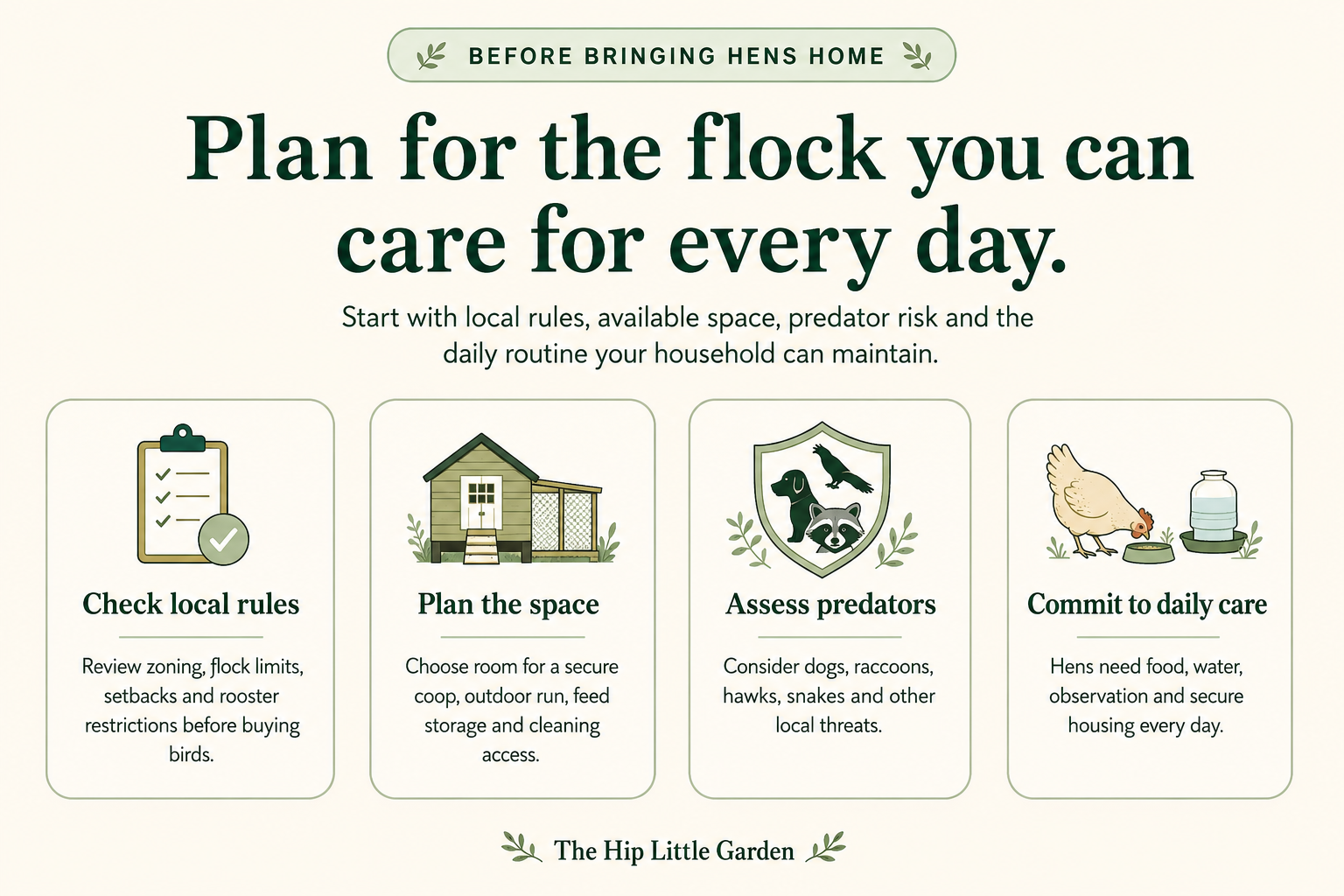
3. Think Like a Predator 🌿
Predator protection should be part of the design from the beginning, not something added after there is a problem. The threats vary depending on where you live, but chicken keepers may need to think about dogs, raccoons, hawks, snakes, and other animals in their area.
Look at the coop and run from every direction. Think about animals that can climb, pull, squeeze through openings, reach through wire, or dig.
Predator-Protection Supplies
Add affiliate links here for the exact products you use or genuinely recommend.
4. Be Realistic About Daily Care 🌿
Chickens need care every day. They need access to food and clean water, secure housing, observation, and a routine for opening, closing, cleaning, and checking the flock.
Before bringing hens home, think about who will handle those jobs when you are tired, busy, sick, away for the day, or dealing with bad weather.
- Who checks food and water every day?
- Who secures the coop at night?
- Who watches the flock when you travel?
- Where will feed and bedding be stored?
- How will you handle freezing or very hot weather?
5. Have the Basics Ready Before Day One 🌿
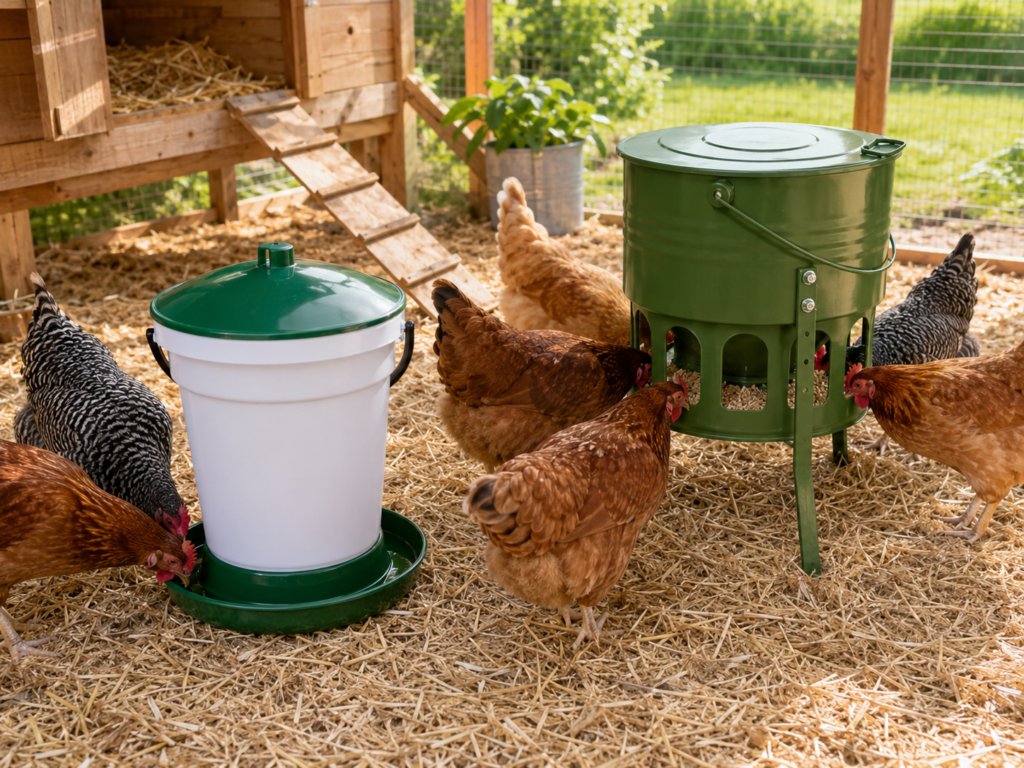
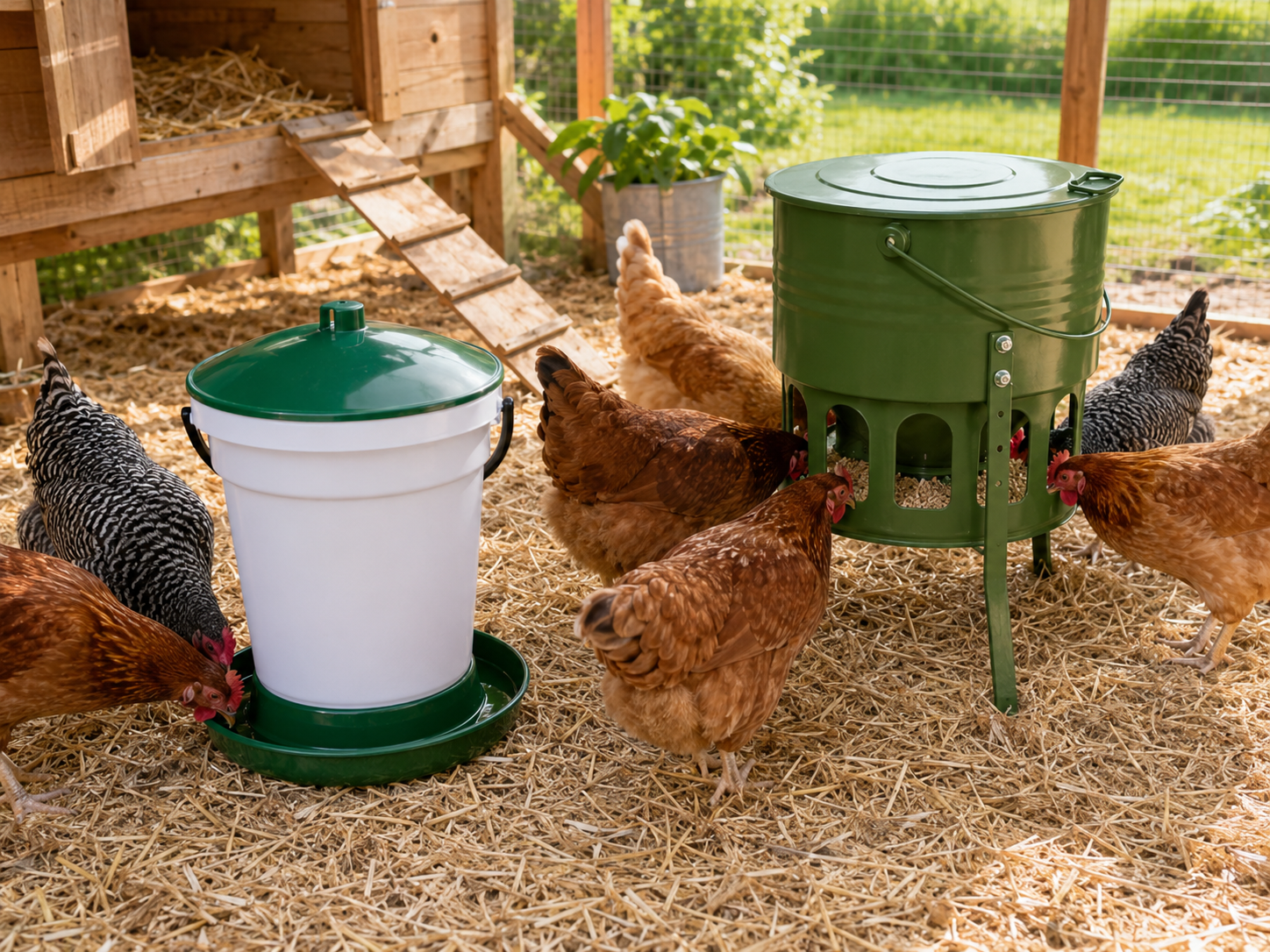
You do not need every chicken accessory on the internet. You do want the basics ready so the first evening with your flock is not spent trying to improvise a feeder, waterer, or secure place to sleep.
Everyday Chicken-Care Essentials
These are good places to link the exact supplies you personally use with your hens.
6. Plan for Weather Before You Need the Plan 🌿
What works on a mild spring day may need adjustment during extreme summer heat, freezing temperatures, heavy rain, or storms. Think through shade, airflow, dry bedding, access to water, and how easily you can reach the coop in poor weather.
If you are using a metal structure like we did, ventilation and summer heat deserve particular attention. We added ventilation high across the front of our coop rather than leaving the shed as a completely enclosed metal box.
7. Start With a Flock You Can Actually Manage 🌿
It can be tempting to start with more chickens than you originally planned. But more birds also mean more feed, more bedding, more waste, more space, and more daily observation.
Starting with a manageable flock gives you time to learn your routine and understand how chickens fit into your household before expanding later.
What I’d Have Ready Before Bringing Hens Home 🌿
- Secure coop and roosting area
- Predator-resistant run or outdoor setup
- Feeder
- Waterer
- Appropriate feed
- Dry feed-storage container
- Bedding
- Cleaning supplies
- A plan for weather and daily care
- A backup caregiver for times you are away
The Hip Little Garden Takeaway 🌿
Chickens can be one of the most enjoyable parts of a backyard or homestead, but the best time to solve chicken problems is before the chickens arrive.
Check the rules. Build the space. Think about predators. Have food and water ready. Decide who will handle daily care. Then bring home a flock that fits the life and property you actually have.
You can always expand later.